Online store in Serbia: from product to first order
A shopper on mobile, during a lunch break, looking for sneakers.
They have a few minutes. They open your site, compare models, and try to filter by size and price. If they cannot quickly find a relevant product, if the images do not provide enough information, or if checkout asks for unnecessary steps, they can easily abandon the purchase.
Each of those obstacles can be addressed through careful planning of the catalogue, content, and purchase flow. The question is whether the selected platform and implementation support the way you want to sell.
If you are planning ecommerce website development, our service page explains what we include in the project foundation, from payments and administration to SEO structure.
Why “a template store for 500€” often doesn’t work
The Serbian market offers many template-based stores and off-the-shelf platforms in the 500-1500€ range. They have their place — for startups testing the market, for low-margin products, for hobby businesses. But when the brand starts to grow, template limits become obstacles:
- Checkout flow — a platform determines the options that are available, while a tailored solution allows more precise adjustment of the purchase steps.
- Product filters — standard options are not always sufficient; footwear, cosmetics, and technical products often need product-specific filters.
- Collection layout — templates offer a limited set of layouts, while a tailored design is planned around the catalogue and brand identity.
- Performance — speed depends on the theme, add-ons, hosting, and content volume; tailored code provides more control over those decisions.
Before starting with a template, ask yourself — will your brand stay within the same limits in two years, or will you need more?
What distinguishes a custom e-commerce site
1. Fast mobile checkout
The route from cart to confirmation should be clear and adapted to the real requirements of delivery and payment. Guest checkout can reduce unnecessary friction where registration is not required, while an optional account can help with repeat orders and order tracking.
2. Advanced product filters
For sports footwear: size + color + brand + price + type (training, running, casual). For clothing: size + color + fabric composition + price. For cosmetics: skin type + composition + price. Filters must be specific to your product — generic (“price, brand”) isn’t enough.
3. Product cards with key information
A catalogue card should present a relevant image, name, price, and availability status. If you use ratings or quick add-to-cart, those elements should be clear and consistent across devices.
4. Product page with gallery + variations
Gallery: 5-8 photos from different angles, optional 360° view or video, zoom function. Variations (size, color) as select or swatches. Availability per variation — if one color is out of stock, clearly marked.
5. Similar product recommendation system
“Similar models” or “You might also like” below the main product. This keeps the buyer in the session when their first choice is out of stock or didn’t fit.
6. Integrated card payment (NestPay / Stripe)
For the Serbian market, the payment processor depends on the bank, contract, and technical requirements. For buyers abroad, check the available international processors, currencies, and business requirements. Subscriptions require a processor and agreement that support recurring payments.
7. Admin panel for product management
Adding products, editing prices, stock management, order processing, sales analytics — all in one panel, no agency calls.
How we build online stores at M·LAB
Our approach is tailored development: we define the architecture, design, and integrations around the catalogue, sales model, and operational requirements of the project. Our work:
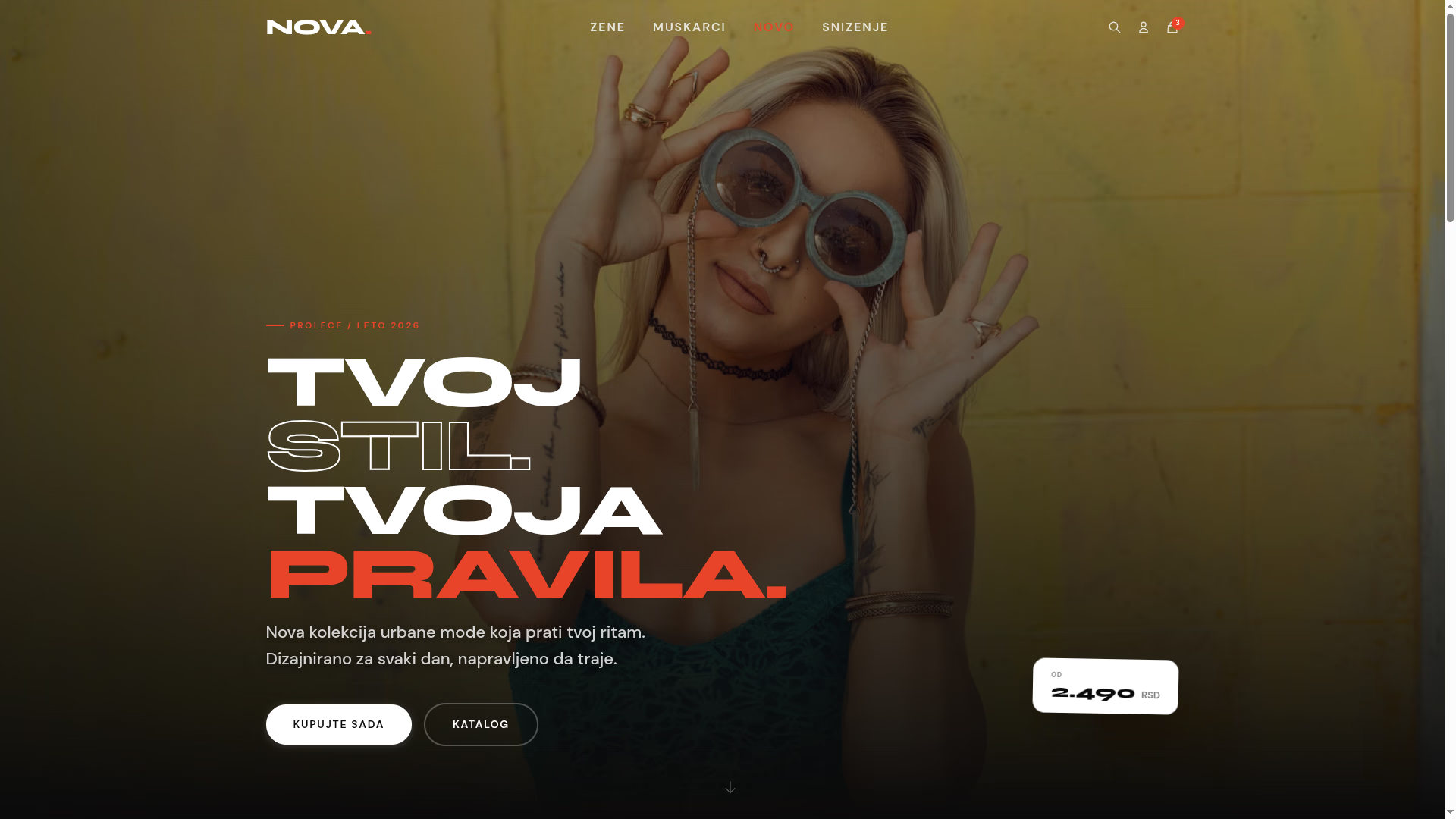
- NOVA Urban Fashion — fashion brand with catalog, filters, checkout flow
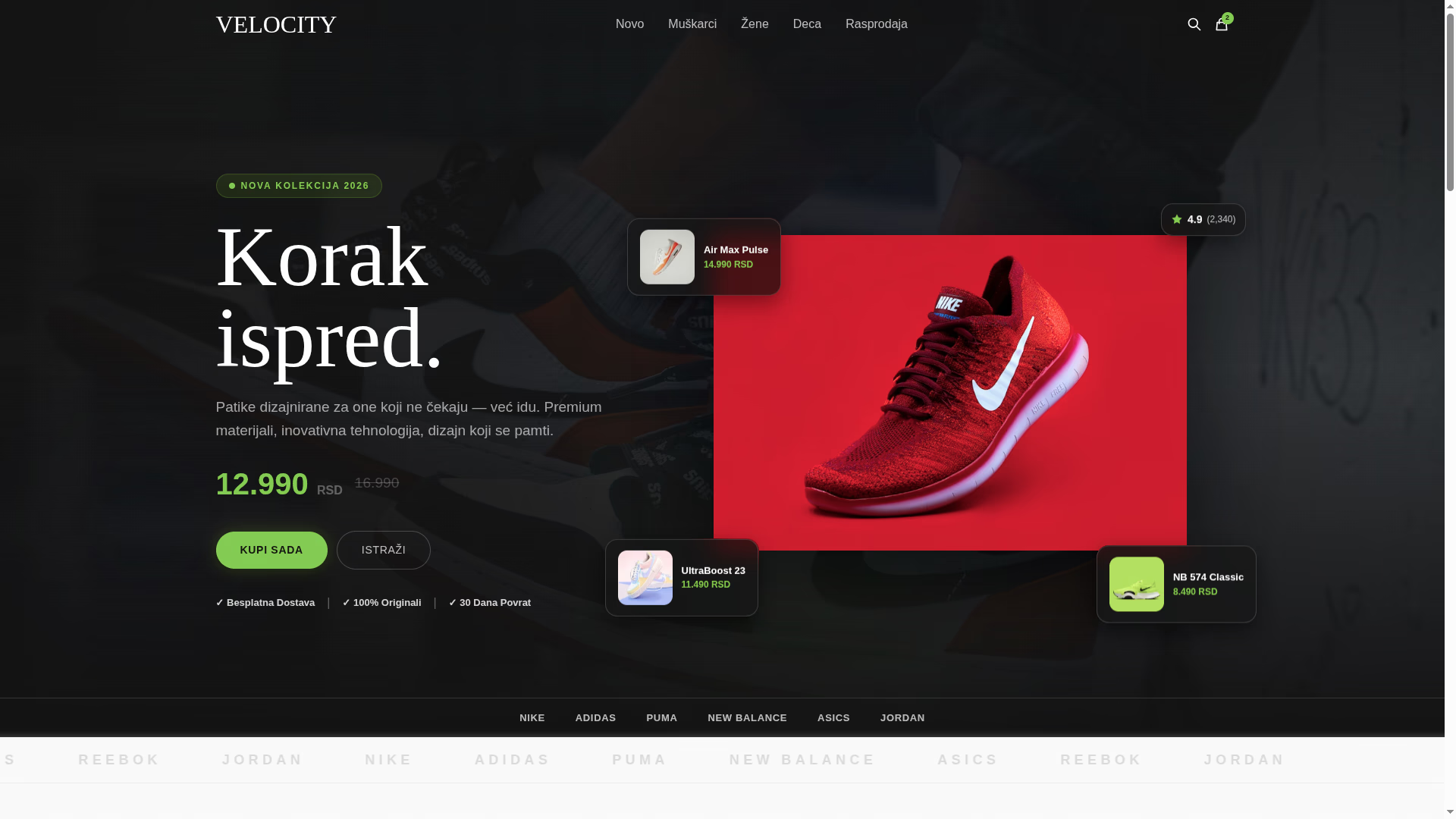
- VELOCITY Sports Footwear — sports footwear with advanced size and color filters
For pricing, see our packages. E-COMMERCE package at 2,200€ covers a standard store with 100-500 products, payment system, admin panel. For large catalogs (1000+ products) or complex integrations (ERP, warehouse) — custom quote.
Frequently asked questions
How much does a custom online store cost?
E-COMMERCE package at 2,200€ is the starting point for stores up to 500 products. For larger catalogs or specific integrations — custom quote. We don’t offer template-based approaches or off-the-shelf platform customization.
Why don’t you offer off-the-shelf template platforms?
We specialise in tailored development. Ready-made solutions have a place at an early stage, but for projects with specific catalogue, integration, or purchase-flow requirements, we favour an architecture planned from the outset.
How long does an e-commerce site take?
The timeline depends on catalogue size, design, integrations, and content preparation. A smaller store with clearly defined requirements can be ready in a few weeks, while more complex projects take longer. We define the exact timeline after a consultation and scope assessment.
Do you integrate with ERP or warehouse systems?
Yes, when the technical documentation and systems allow it. In a tailored proposal, we assess stock synchronisation, price updates from supplier databases, and integration with fiscal or other business systems.
Does the site support two languages and two currencies?
Yes, in the E-COMMERCE package. SR + EN with dinar and EUR pricing. For more currencies (USD, GBP) — custom quote.
Ready to launch your online store?
Reach out via WhatsApp — we reply within minutes. Free consultation.
See NOVA and VELOCITY case studies and detailed pricing.
Need a similar website?
Contact us — free consultation, no commitment.